

Crypto Tax Reform 2025: IRS 1099-DA & Policy Shifts
Crypto taxation is entering its most pivotal phase yet, from Form 1099-DA to bipartisan reform efforts on Capitol Hill.
I sat down with Andrew Gordon, Founder of Main Street Crypto PAC, to examine where U.S. crypto-tax policy is headed and what it means for investors, founders, and firms preparing for this new enforcement era



Listen to the full episode using the player below, or watch the video recording for the complete discussion and visual references.
Key Quotes
Timestamped Highlights
Episode Transcript
The transcript below is for reference and reflects the full recorded conversation with minor edits.
1099-DA Reporting, DeFi Regulation, Stablecoin Taxation, and Crypto Tax Reform
A conversation with Andrew Gordon, CPA, tax attorney, Managing Partner of Gordon Law Group, and founder of Main Street Crypto, discussing 1099-DA reporting, DeFi regulation, stablecoin taxation, staking, wash sales, and the future of crypto tax policy in Washington, D.C. Host: Patrick Camuso, CPA, Camuso CPA Guest: Andrew Gordon, CPA, Gordon Law Group & Main Street CryptoEditor’s Note
The following transcript has been lightly edited for publication. Grammar, punctuation, and transcription errors have been corrected for readability. Portions affected by automated transcription limitations have been clarified where context made the intended meaning clear. The substance of the conversation has been preserved.Transcript
Patrick Camuso, CPA 01:37
Welcome to the latest episode of The Financial Frontier. I’m your host, Patrick Camuso. I’m joined today by Andrew Gordon, CPA, tax attorney, Managing Partner at Gordon Law Group, and founder of Main Street Crypto. Andrew is one of the few practicing crypto tax attorneys actively working on crypto tax policy in Washington, D.C., so this should be a very interesting conversation. Andrew, thanks for joining us.Andrew Gordon 02:10
Thank you for having me. Looking forward to it.Patrick Camuso, CPA 02:18
Absolutely. There’s a lot I want to cover today. I want to start with one of the topics that’s going to be top of mind for investors, platforms, and virtually everyone operating in crypto this tax season: Form 1099-DA. The IRS recently released guidance for tax professionals on how to reconcile these forms and what taxpayers should expect when dealing with them. What do you think will be some of the biggest operational challenges for exchanges, marketplaces, custodial providers, and others responsible for issuing these forms?Andrew Gordon 03:00
First, it’s encouraging to see the government thinking through digital asset tax reporting and trying to make compliance easier for everyday traders and investors. Historically, crypto taxation has been unlike anything else. Investors have been responsible for tracking their own transactions, calculating gains and losses, and reporting everything correctly on their tax returns. If they got it wrong, they faced the possibility of penalties, notices, or audits. So, in principle, additional reporting is a positive development. That said, there are going to be significant challenges for every stakeholder involved. For exchanges and custodial platforms, this is a completely new reporting regime. They now have responsibility for issuing these forms, and many investors will be receiving crypto tax reporting directly from a platform for the first time. Naturally, that is going to generate questions. The biggest issue is cost basis. Cost basis requires a complete picture of a taxpayer’s activity. In the traditional securities world, brokers generally have all of the information they need because assets typically remain inside the brokerage ecosystem. Crypto doesn’t work that way. Assets move between exchanges, self-custody wallets, DeFi protocols, staking platforms, and other venues. Because of that, a platform may only see a portion of a taxpayer’s activity. As a result, many taxpayers are going to receive a Form 1099-DA that reflects transactions occurring on a particular platform, but does not necessarily provide the complete tax picture. That disconnect is likely to create confusion and additional compliance work.Patrick Camuso, CPA 04:30
Absolutely. I think it’s also going to create a significant customer service burden for many of these platforms when Forms 1099-DA begin arriving. They’re going to receive a tremendous number of questions from investors who assume the form contains everything they need to prepare a return, when in reality the information often needs to be reconciled against the taxpayer’s own records. That reconciliation process can be complicated. On the investor side, what are you seeing? Are investors preparing for this? Are they complying with Revenue Procedure 2024-28? What are you seeing at your firm?Andrew Gordon 05:13
Our clients are prepared and ready to go. But if I had to guess, the overwhelming majority of crypto investors are not. Most investors have had some degree of tax compliance issues historically, and many have not implemented the changes required under Revenue Procedure 2024-28. Many have not adopted the account-by-account or wallet-by-wallet approach that is now required. In fact, many people listening to this conversation may not even know what those rules are. That’s part of the problem. Most investors are unaware of the changes, and unfortunately many accountants and tax professionals are also unaware of them. If you’re a crypto investor, you need to make sure you’re working with a CPA or tax advisor who understands these developments. Otherwise, you may be exposing yourself to unnecessary risk.Patrick Camuso, CPA 06:00
I’m seeing exactly the same thing. The investors we’re working with who are returning clients are generally up to date. They’re implementing the required procedures and preparing for the transition. But many investors are completely in the dark. Some aren’t even fully caught up on their accounting records, which is a prerequisite for implementing Revenue Procedure 2024-28 correctly. I’m also seeing many accountants and CPAs who aren’t deeply involved in digital asset taxation and simply haven’t kept up with the new guidance. If you’re not reading these developments carefully, you may not be advising clients appropriately. Ultimately, taxpayers who fail to follow the required account-based approach may find themselves facing significant issues once the new reporting framework becomes fully operational.Patrick Camuso, CPA 06:58
Another aspect of this that I think is particularly interesting is how Form 1099-DA reporting may apply to decentralized finance protocols in the future. DeFi was ultimately excluded from the finalized regulations, at least for now. Where do you see that debate heading over the long term, especially as administrations change and policy priorities evolve?Andrew Gordon 07:24
I was very pleased to see decentralized finance protocols excluded from the finalized regulations. For a while, that was a very uncertain issue. Many of the proposed rules would have imposed reporting obligations on decentralized platforms that, in practical terms, would have been extremely difficult to implement. Some proposals also raised concerns about applying reporting requirements to foreign entities and protocols that have little or no traditional U.S. presence. The concern many of us had was that overly broad reporting requirements could effectively restrict access for U.S. participants while doing little to improve compliance. Fortunately, Congress stepped in and prevented some of those requirements from moving forward. That said, I think Patrick raises an important point. Regulatory priorities change. Administrations change. Political attitudes toward crypto change. There will absolutely be future attempts to revisit DeFi reporting requirements. A large amount of innovation and trading activity now occurs on decentralized exchanges. We’re seeing more users gravitate toward those platforms because they provide broader access and often fewer restrictions than centralized exchanges. As that trend continues, policymakers are naturally going to pay more attention to DeFi. The key is making sure regulators understand both the technology and the consequences of whatever rules they propose.Patrick Camuso, CPA 09:45
Absolutely. I think this is going to remain one of the major policy debates over the long term. It’s an area where people need to stay engaged because the outcomes could have a significant impact on innovation, market structure, and investor access. I know you’re doing a lot of work through Main Street Crypto to help bring those issues directly to policymakers, and I want to come back to that shortly. Before we do, one thing I’ve seen you discuss publicly is the idea of creating a safe harbor for unintentional crypto tax non-compliance. Obviously, we both see a tremendous amount of non-compliance in practice. We’re still cleaning up cost basis records and transaction histories that go back years. Even the IRS has cited compliance rates that suggest a large percentage of crypto investors are not reporting everything correctly. What’s the appetite in Washington for addressing that problem?Andrew Gordon 11:11
The appetite is better today than it’s ever been. For years, many of us have been trying to educate policymakers about how crypto taxation actually works in practice. There were situations where policymakers and regulators didn’t fully understand things that seem obvious to practitioners, such as how stablecoins function or how cost basis tracking works across wallets and platforms. Today, the conversations are different. The staff members I meet with on Capitol Hill understand these issues far better than they did several years ago. They’re paying attention. They’re asking better questions. And I think that’s only going to continue. A lot of the discussion in Washington has focused on market structure and stablecoin legislation. But increasingly, people are beginning to recognize that crypto taxation is one of the most important unresolved policy areas. Taxes are ultimately where investors interact most directly with the government. If we want long-term compliance, we need rules that people can actually understand and follow. One area I’ve been discussing extensively is the possibility of a voluntary disclosure program specifically designed for crypto taxpayers.Patrick Camuso, CPA 12:22
That’s something I think would have a meaningful impact.Andrew Gordon 12:28
I agree. There is still a misconception in some circles that crypto investors simply don’t want to comply. I don’t think that’s accurate. Most investors want to comply. Most investors are willing to pay whatever tax they legally owe. The problem is that the rules are extraordinarily difficult to navigate. Many investors don’t know what records they need. Many don’t know how to reconstruct years of activity. Many are afraid that if they come forward they’ll immediately trigger penalties, audits, or other enforcement actions. That’s why a structured voluntary disclosure program makes sense. It would allow taxpayers to come forward, correct prior reporting issues, pay what they owe, and move into compliance without fearing the worst possible outcome. The government collects revenue. Taxpayers become compliant. Everyone benefits.Patrick Camuso, CPA 13:45
I completely agree. Ultimately, one of the biggest opportunities here is improving compliance rates while reducing complexity. And that leads naturally into another topic we’ve both discussed for years: de minimis exemptions for smaller transactions. How are those conversations progressing in Washington?Andrew Gordon 14:35
Crypto taxation is simply too complex for routine consumer use. You shouldn’t have to track and report every small transaction. If someone spends five dollars worth of crypto, the compliance burden can easily exceed any meaningful tax consequence. That’s not an efficient system. I’ve seen situations where taxpayers generate hundreds or thousands of pages of transaction records over relatively small amounts of economic activity. That isn’t good for taxpayers and it isn’t particularly useful for the IRS either. We’re never going to reach a point where people comfortably use digital assets for everyday transactions if every purchase creates a taxable reporting obligation. Whether it’s buying coffee, paying for a meal, or spending stablecoins for ordinary purchases, there needs to be a practical solution. The challenge is designing one. Washington understands the problem. The debate now is about implementation.Patrick Camuso, CPA 16:51
I’d really like to see some form of de minimis exemption become law because I think it solves a lot of practical problems. That ties into another area that I think needs attention as well: stablecoin taxation. If policymakers want stablecoins to become a meaningful payment mechanism, the tax treatment has to be workable. What’s your perspective on that?Andrew Gordon 17:17
Stablecoins are a perfect example of where the current tax framework doesn’t align with economic reality. In most cases, stablecoins are designed to maintain a one-to-one relationship with the U.S. dollar. Yet technically, every disposition can create a taxable event. The absurdity is that we’ve had clients receive IRS notices for failing to report stablecoin transactions. In some cases, those notices involve significant proposed tax adjustments because the IRS sees a disposition but doesn’t have corresponding basis information. From a practical perspective, most of those transactions produce little or no economic gain. Maybe there’s a small gain or loss due to market fluctuations, but often the result is negligible. The compliance burden can be completely disproportionate to the actual tax consequence. That’s why I believe stablecoin taxation deserves serious attention from policymakers. If stablecoins are going to become part of everyday commerce, we need rules that recognize how they function in practice.Patrick Camuso, CPA 18:37
I agree. As stablecoins become more integrated into payments and commerce, these issues become increasingly important. There’s also an entirely separate conversation around state taxation and sales tax implications, but that’s probably a discussion for another day. Another topic that has generated a tremendous amount of debate throughout the industry is staking. We’ve seen litigation, administrative guidance, and years of discussion surrounding how staking rewards should be taxed. What are you seeing today?Andrew Gordon 19:19
Staking, mining, and even airdrops all raise similar questions. Under the current framework, taxpayers generally recognize income when they receive the asset and then recognize gain or loss again when they eventually dispose of it. At a high level, that sounds straightforward. In practice, it creates significant challenges. One issue is that taxpayers may be required to recognize taxable income before they’ve generated any liquidity. Another issue is volatility. A taxpayer may recognize income based on a particular value when rewards are received, only to see the asset decline substantially before they sell it. That creates situations where taxpayers owe tax based on value they no longer have. Many participants view that result as inconsistent with how other forms of property creation are treated. When someone creates artwork, extracts minerals, or produces certain other forms of property, taxation often occurs later in the process. Crypto participants frequently ask why staking and mining should be treated differently. Those are legitimate policy questions.Patrick Camuso, CPA 20:20
It’s also a major operational challenge. When we’re working with mining companies, staking validators, or larger investors, tax planning becomes critically important. You have to stay on top of accounting records, estimated tax payments, liquidity planning, and exposure management. Because we’ve both been through enough market cycles to know how quickly conditions can change. A taxpayer may recognize income at one valuation and then see the asset decline dramatically before having an opportunity to sell. That creates real cash-flow problems.Andrew Gordon 20:56
Exactly. The current framework can force taxpayers into situations where they’re managing tax liabilities and market risk simultaneously. That complexity discourages participation and creates unnecessary compliance burdens. At minimum, I think policymakers should continue examining whether current treatment produces the right policy outcome. The goal should be a system that encourages compliance while reflecting economic reality.Patrick Camuso, CPA 21:08
One thing I think many people would agree on is that simplification should be a major objective. Whether we’re talking about reporting requirements, stablecoins, staking, mining, or airdrops, complexity itself often becomes one of the biggest obstacles to compliance. And that’s particularly true in an industry where technology continues evolving faster than the rules governing it.Andrew Gordon 21:18
That’s exactly right. Most taxpayers aren’t trying to avoid compliance. They’re trying to understand what they’re supposed to do. The more complex the rules become, the harder that becomes. And when complexity increases, mistakes increase. That isn’t good for taxpayers, and it isn’t good for regulators. Ultimately, the objective should be creating a framework that people can realistically follow. That’s how you improve compliance over the long term.Patrick Camuso, CPA 16:51
I’d really like to see some form of de minimis exemption become law because I think it solves a lot of practical problems. That ties into another area that I think needs attention as well: stablecoin taxation. If policymakers want stablecoins to become a meaningful payment mechanism, the tax treatment has to be workable. What’s your perspective on that?Andrew Gordon 17:17
Stablecoins are a perfect example of where the current tax framework doesn’t align with economic reality. In most cases, stablecoins are designed to maintain a one-to-one relationship with the U.S. dollar. Yet technically, every disposition can create a taxable event. The absurdity is that we’ve had clients receive IRS notices for failing to report stablecoin transactions. In some cases, those notices involve significant proposed tax adjustments because the IRS sees a disposition but doesn’t have corresponding basis information. From a practical perspective, most of those transactions produce little or no economic gain. Maybe there’s a small gain or loss due to market fluctuations, but often the result is negligible. The compliance burden can be completely disproportionate to the actual tax consequence. That’s why I believe stablecoin taxation deserves serious attention from policymakers. If stablecoins are going to become part of everyday commerce, we need rules that recognize how they function in practice.Patrick Camuso, CPA 18:37
I agree. As stablecoins become more integrated into payments and commerce, these issues become increasingly important. There’s also an entirely separate conversation around state taxation and sales tax implications, but that’s probably a discussion for another day. Another topic that has generated a tremendous amount of debate throughout the industry is staking. We’ve seen litigation, administrative guidance, and years of discussion surrounding how staking rewards should be taxed. What are you seeing today?Andrew Gordon 19:19
Staking, mining, and even airdrops all raise similar questions. Under the current framework, taxpayers generally recognize income when they receive the asset and then recognize gain or loss again when they eventually dispose of it. At a high level, that sounds straightforward. In practice, it creates significant challenges. One issue is that taxpayers may be required to recognize taxable income before they’ve generated any liquidity. Another issue is volatility. A taxpayer may recognize income based on a particular value when rewards are received, only to see the asset decline substantially before they sell it. That creates situations where taxpayers owe tax based on value they no longer have. Many participants view that result as inconsistent with how other forms of property creation are treated. When someone creates artwork, extracts minerals, or produces certain other forms of property, taxation often occurs later in the process. Crypto participants frequently ask why staking and mining should be treated differently. Those are legitimate policy questions.Patrick Camuso, CPA 20:20
It’s also a major operational challenge. When we’re working with mining companies, staking validators, or larger investors, tax planning becomes critically important. You have to stay on top of accounting records, estimated tax payments, liquidity planning, and exposure management. Because we’ve both been through enough market cycles to know how quickly conditions can change. A taxpayer may recognize income at one valuation and then see the asset decline dramatically before having an opportunity to sell. That creates real cash-flow problems.Andrew Gordon 20:56
Exactly. The current framework can force taxpayers into situations where they’re managing tax liabilities and market risk simultaneously. That complexity discourages participation and creates unnecessary compliance burdens. At minimum, I think policymakers should continue examining whether current treatment produces the right policy outcome. The goal should be a system that encourages compliance while reflecting economic reality.Patrick Camuso, CPA 21:08
One thing I think many people would agree on is that simplification should be a major objective. Whether we’re talking about reporting requirements, stablecoins, staking, mining, or airdrops, complexity itself often becomes one of the biggest obstacles to compliance. And that’s particularly true in an industry where technology continues evolving faster than the rules governing it.Andrew Gordon 21:18
That’s exactly right. Most taxpayers aren’t trying to avoid compliance. They’re trying to understand what they’re supposed to do. The more complex the rules become, the harder that becomes. And when complexity increases, mistakes increase. That isn’t good for taxpayers, and it isn’t good for regulators. Ultimately, the objective should be creating a framework that people can realistically follow. That’s how you improve compliance over the long term.Guest Profile
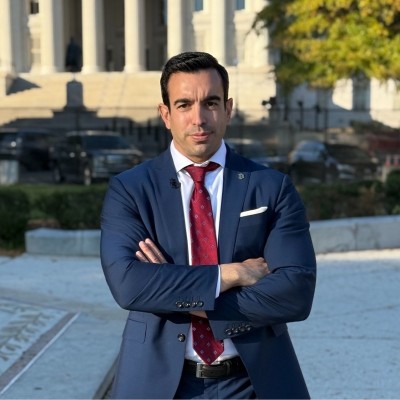 Gordon Law
Andrew Gordon
President
Andrew B. Gordon is the managing attorney of Gordon Law Group, a suburban Chicago based law firm.